
A federal appeals court has affirmed the drug and firearm conviction of Michael J. Yumang, rejecting his claims that a brief closure of the courtroom during his bench trial violated his Sixth Amendment right to a public trial, and that the exclusion of certain cross-examination questions was an error.
The Seventh Circuit Court of Appeals ruled that the five-minute closure—which occurred solely to put a side discussion on the record—was too insignificant to constitute a constitutional violation, especially since the defendant himself had initially sought the sidebar. Furthermore, the court found the district judge had acted within his discretion by limiting cross-examination regarding a forensic chemist’s post-incident performance review.
Background of the Case
Michael Yumang was convicted on multiple drug-trafficking charges following searches of his suburban Milwaukee home and vehicle in 2019 and 2022. During these searches, authorities discovered significant quantities of methamphetamine, a handgun, and ammunition. Just before the 2022 search, federal agents intercepted a package containing a quarter pound of meth addressed to Yumang.
During police interviews, Yumang admitted to regularly acquiring methamphetamine from a California source for resale in Wisconsin. He opted for a bench trial (a trial decided by a judge rather than a jury) where he maintained that some of the drugs were for personal use or belonged to others. The district judge ultimately found him guilty on all counts, resulting in a sentence of 180 months in prison.
The Courtroom Closure Issue
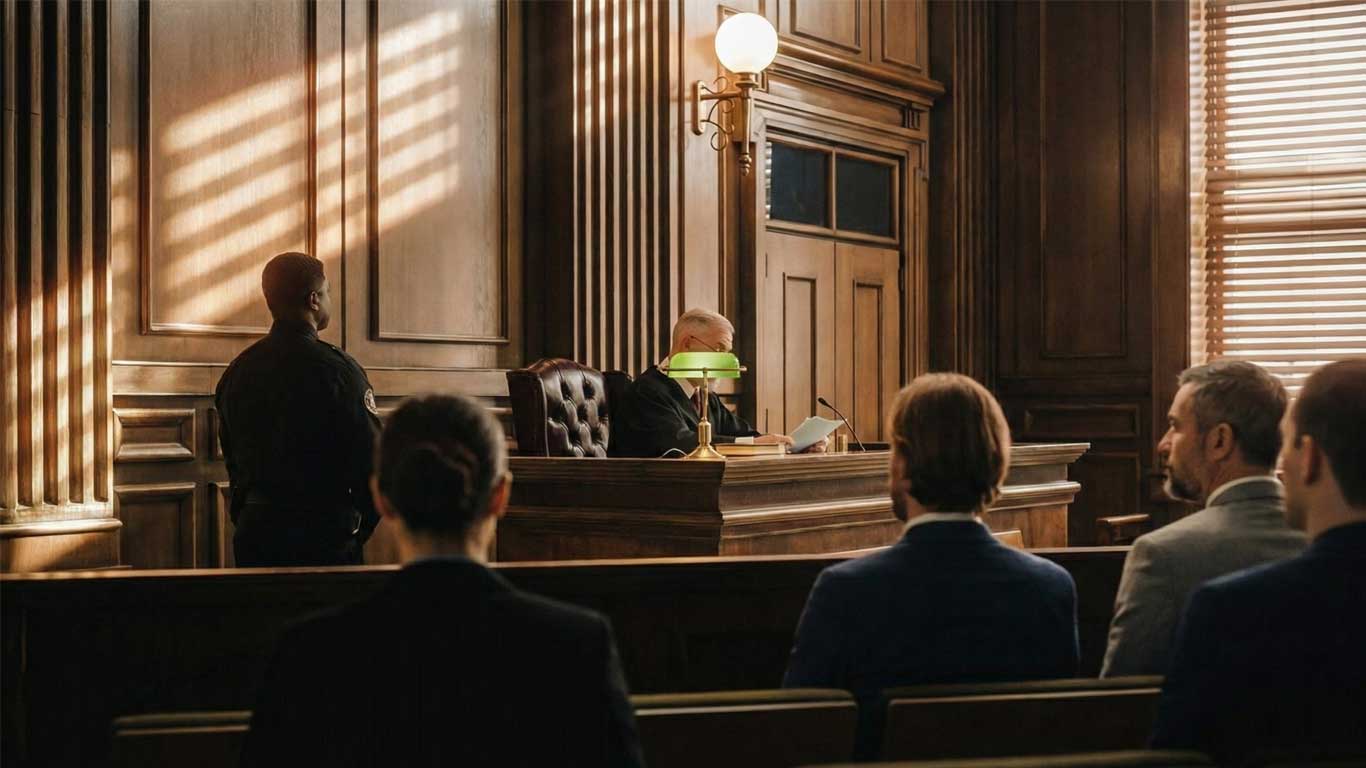
Yumang’s primary appeal centered on a brief moment during the trial when the courtroom was cleared of spectators. This occurred after the government rested its case, when the prosecutor suggested making a formal record of a prior, unrecorded sidebar discussion concerning a DEA chemist’s employment history.
The defense attorney asked if the record should be made in open court or closed session. Following the prosecutor’s request based on a protective order covering the sensitive information, the judge closed the courtroom for about five minutes to allow the attorneys to summarize their arguments regarding the excluded cross-examination.
The appeals court acknowledged the fundamental importance of the Sixth Amendment right to a public trial, which aims to restrain judicial abuse and encourage fairness. However, the court emphasized that this right is not absolute and can give way to trivial matters.
Judge Sykes, writing for the Seventh Circuit panel, stated that the closure in this instance was “too trivial to be a Sixth Amendment error at all, let alone a reversible plain error.” The court noted that the defendant either invited the error by acquiescing to the closure or at minimum forfeited the issue by not objecting at the time.
Crucially, the closure was limited in duration (five minutes) and scope, covering only the formalizing of a decision the judge had already made off the record earlier in the trial. The court reasoned that sidebar conferences themselves often do not implicate the public trial right, suggesting that the brief formality to record that sidebar similarly caused no constitutional harm.
Exclusion of Cross-Examination Evidence
The second challenge involved the exclusion of cross-examination questions directed at the DEA chemist who analyzed the 2019 drug seizures. Prior to trial, the government disclosed, under a protective order, that the chemist had been placed on a performance improvement plan (PIP) in 2023 due to productivity and technical deficiencies.
Yumang’s attorney sought to question the chemist about the PIP during cross-examination, arguing it bore on her credibility. The district judge disallowed the line of questioning, ruling that the 2023 PIP was irrelevant because the chemist’s analysis in Yumang’s case occurred in 2019, years before any concerns about her performance arose.
The Seventh Circuit agreed with the district court. Judge Sykes noted that trial judges have broad latitude to impose reasonable limits on cross-examination, especially when inquiries are only “marginally relevant.” Because the PIP post-dated the analysis by three and a half years, the evidence had minimal—if any—probative value regarding the integrity of her 2019 work.
Furthermore, the court pointed out that Yumang had admitted in recorded statements and during his trial testimony that he possessed and distributed methamphetamine. Given the lack of serious dispute over the nature of the drugs, any potential error in excluding the impeachment evidence was deemed harmless. The court found no abuse of discretion in the evidentiary ruling, nor any violation of Yumang’s rights under the Confrontation Clause.
The appeals court concluded that the evidence of Yumang’s guilt was overwhelming, affirming the district court’s judgment.