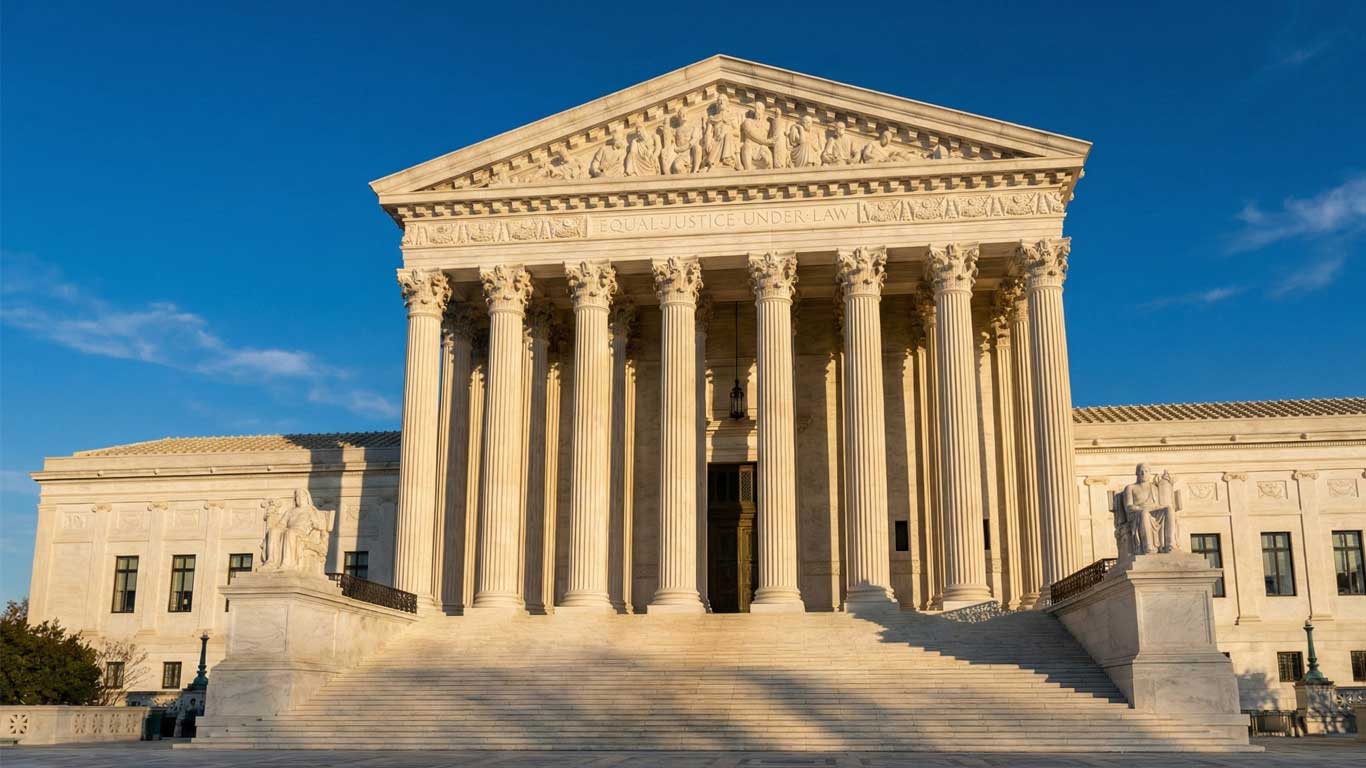
A federal appeals court has upheld a ruling by the National Labor Relations Board (NLRB) finding that CenturyTel of Montana, Inc., violated federal labor law by refusing to provide the International Brotherhood of Electrical Workers, Local Union 768 (the Union), with requested information regarding non-union technicians working in the Union’s jurisdiction. The U.S. Court of Appeals for the D.C. Circuit denied CenturyTel’s petition for review and granted the Board’s cross-application for enforcement of its order on January 13, 2026.
The core of the dispute centered on CenturyTel’s obligation, under the National Labor Relations Act (NLRA), to furnish information that the Union deemed necessary to monitor compliance with their decades-old collective bargaining agreement (CBA).
The Information Request and the Dispute
CenturyTel, a subsidiary of Lumen Technologies, Inc., has a CBA covering installation, maintenance, and repair workers in northwest Montana. The CBA includes a letter of understanding that generally restricts employees from other bargaining units (dubbed “National Technicians”) from working in Local 768’s jurisdiction unless local employees are unavailable or during emergencies.
In late July 2021, the Union, alerted by a broader IBEW council that Lumen entities nationwide were using National Technicians, decided to investigate the situation locally. On August 9, the Union sent out a model information request template concerning the use of these non-union technicians.
The following day, August 10, George Bland, the Union’s business manager, sent this detailed request to CenturyTel’s regional manager, John Bemis. The request sought extensive data—including the number, duration, and nature of work performed by National Technicians in Local 768’s jurisdiction—stating the information was necessary for monitoring the CBA and processing potential grievances.
Bemis called Bland shortly after receiving the email. During this conversation, which the administrative law judge (ALJ) later found crucial, Bemis acknowledged that two National Technicians were working in Montana. Bland testified that Bemis confirmed they were working in the Union’s “jurisdiction” or “area.” Bemis forwarded the request internally, but the company was slow to respond. By August 25, the Union threatened an unfair labor practice (ULP) charge for failure to respond.
CenturyTel’s Resistance and the Board’s Findings
CenturyTel eventually responded on September 1, 2021, via HR Advisor Keller Noble. While Noble confirmed two National Technicians were present and provided some job descriptions, she questioned the relevance of the request regarding the number and duration of their work, arguing these employees were not union members and were not performing bargaining unit work.
Bland countered that the Union had the right to independently determine if the technicians were performing unit work. After further back-and-forth where Noble provided only partial information and asserted the request was outside the CBA’s scope, the Union filed the ULP charge on October 1, 2021.
The NLRB General Counsel subsequently alleged CenturyTel violated Sections 8(a)(5) and (1) of the NLRA by refusing to bargain in good faith through the failure to provide relevant information.
The ALJ sided with the Union, finding that the relevance of the request should have been apparent to CenturyTel, especially given Bemis’s August 10 admission that the technicians had been in the Union’s “area.” The ALJ also noted a history of prior grievances filed by the Union against CenturyLink (CenturyTel’s predecessor) regarding similar issues involving non-union personnel performing unit work in the same area in 2017 and 2018.
The D.C. Circuit Affirms Precedent
The full Board affirmed the ALJ’s findings, agreeing that the Union established the requested information was relevant at the time of the request. A key aspect of the Board’s decision, which CenturyTel challenged, was its long-standing precedent: a union does not have to disclose the complete factual basis for its information request when making it. Instead, the relevance only needs to be demonstrated with a “reasonable belief” by the time of the ULP hearing.
The D.C. Circuit heavily relied on this precedent in its opinion, written by Senior Circuit Judge Rogers. The court noted that the requirement for employers to provide relevant information stems directly from the statutory duty to bargain in good faith, as established in foundational cases like *NLRB v. Truitt Manufacturing Co.*
CenturyTel argued that the Board erred by relying on evidence presented for the first time at the ULP hearing, such as the 2018 grievances and internal council reports, claiming this violated procedural standards and that the initial request lacked objective support.
However, the Court found CenturyTel’s challenges unpersuasive:
1. Substantial Evidence: The court determined that the Board’s findings were supported by substantial evidence, particularly the credibility determination favoring Bland’s account of the August 10 phone call. The ALJ credited Bland’s testimony that Bemis admitted technicians were working in the Union’s “jurisdiction,” and the court deferred to these credibility findings.
2. Apparent Relevance: The court agreed with the Board that the relevance of the request should have been “readily apparent” to CenturyTel management immediately after the August 10 call, where Bemis acknowledged the technicians’ presence in the area shortly after receiving a request about potential unit work diversion.
3. Procedural Failures: CenturyTel forfeited several procedural arguments by failing to raise them in its exceptions to the Board’s decision. This included objections to the admission of evidence that wasn’t produced via pre-hearing subpoena.
The Court concluded that the evidence—the initial request, Bemis’s acknowledgment of the technicians’ presence in the area, and the history of similar disputes—was sufficient to establish a reasonable belief that unit work diversion might be occurring. Therefore, CenturyTel’s refusal constituted a violation of Section 8(a)(5) and (1) of the Act. The petition for review was denied, and the Board’s order was enforced.