
The Alabama Court of Civil Appeals has stepped in on a dispute over crime victim compensation, siding with a brother whose claim for his sister’s funeral expenses was denied by the Alabama Crime Victims Compensation Commission (ACVCC). The appellate court ruled that the ACVCC’s decision—which hinged on a very narrow reading of what constitutes “criminally injurious conduct”—was an unwarranted exercise of discretion.
The case centers on the death of Miriam Thomas Richardson, who was struck and killed by a vehicle in February 2019. The driver, Raven Shealey, was charged with leaving the scene of an accident resulting in injury or death, a Class C felony under Alabama law. Kenneth Thomas, the victim’s brother, filed a claim for funeral expenses under the Alabama Crime Victims Compensation Act (the Act).
The Commission’s Stance: Timing Matters
The ACVCC initially denied the claim in March 2021, citing “Non-Criminally Injurious Conduct.” This denial was upheld after an administrative hearing in June 2021.
The Commission’s key argument, supported by testimony from an ACVCC specialist, was based on the timing of the offense. They argued that leaving the scene of an accident occurs *after* the victim has been injured or killed. Therefore, the act of fleeing did not *result* in the death, and thus did not qualify as “criminally injurious conduct” under the Act’s definition, which requires an act that “results in serious personal injury or death.”
The driver was charged only with leaving the scene, not with vehicular homicide or manslaughter related to the initial impact. The ACVCC asserted that because the only proven crime occurred after the fatality, the death itself was a result of an “accident,” not a compensable criminal act.
The Circuit Court Overturns the Denial
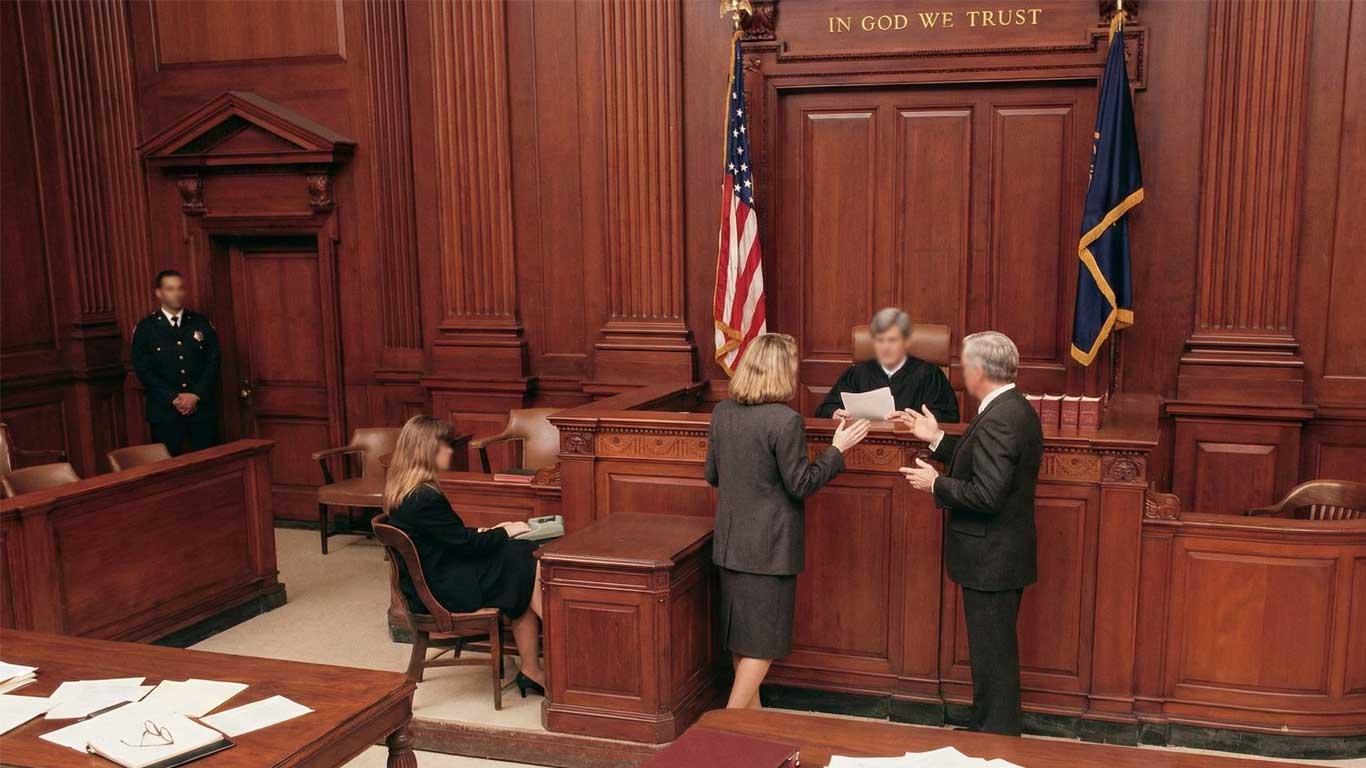
Kenneth Thomas appealed the ACVCC’s final decision to the Montgomery Circuit Court. In a February 2025 judgment, the circuit court reversed the Commission’s decision, labeling it “arbitrary, capricious and a clearly unwarranted exercise of discretion.”
The circuit court focused squarely on the statutory definition provided in the Act: “Criminally injurious conduct includes any of the following acts: (a) An act occurring or attempted within the geographical boundaries of this state which results in serious personal injury or death to a victim for which punishment by fine, imprisonment, or death may be imposed.”
The circuit court noted that the driver was ultimately convicted of leaving the scene of an accident involving injury or death, which is punishable as a Class C felony (up to 10 years in prison). The lower court reasoned that when a person dies, any related criminal act that carries felony punishment must qualify. During a hearing, the judge expressed frustration with the Commission’s logic: “Somebody died, ma’am. This is not a fender bender… That makes it a crime, doesn’t it? Doesn’t it?”
Appellate Court Backs the Agency’s Interpretation
The ACVCC appealed the circuit court’s reversal. In its decision issued in December 2025, the Alabama Court of Civil Appeals sided with the Commission, reversing the circuit court’s judgment.
The appellate court applied a *de novo* standard of review to the statutory interpretation, meaning they gave no deference to the circuit court’s findings on the law, but still deferred to the ACVCC’s interpretation of the statute it administers, provided that interpretation was reasonable.
Judge Bowden, writing for the majority, emphasized the “plain-language interpretation” of the Act. The court looked closely at the requirement that the act must “result” in injury or death.
“Injury or death is not a logical consequence of the act of leaving the scene of an accident in which death or injury has occurred,” the opinion stated. “Instead, the act of leaving the scene of an accident in which death or injury has occurred necessarily presumes that the injury or death occurred before the act of leaving the scene.”
The court highlighted that while other states have explicitly amended their statutes to include leaving the scene of an accident involving injury as compensable conduct, Alabama’s legislature has not done so. The majority declined to “expand the definition” beyond what the text plainly states, noting that doing so would usurp the legislative function.
Furthermore, the appellate court agreed with the ACVCC’s secondary finding: that the death was the result of an accident. The ACVCC pointed to testimony from police supervisors confirming the driver was only charged with leaving the scene, not for the initial striking of the victim. The court found that the Commission reasonably chose not to substitute its judgment for that of the agency regarding this factual matter.
The Court of Civil Appeals concluded that the ACVCC’s interpretation was reasonable and consistent with the legislative intent to compensate victims for expenses incurred as a “direct result of criminal acts.” The judgment of the circuit court was reversed, and the case was sent back with instructions to affirm the original denial by the ACVCC.
One judge, Justice Fridy, concurred specially, using the opportunity to reiterate his skepticism regarding the judicial practice of determining “legislative intent” and questioning the continued viability of judicial deference to agency interpretations of statutes in Alabama law.
Case Information