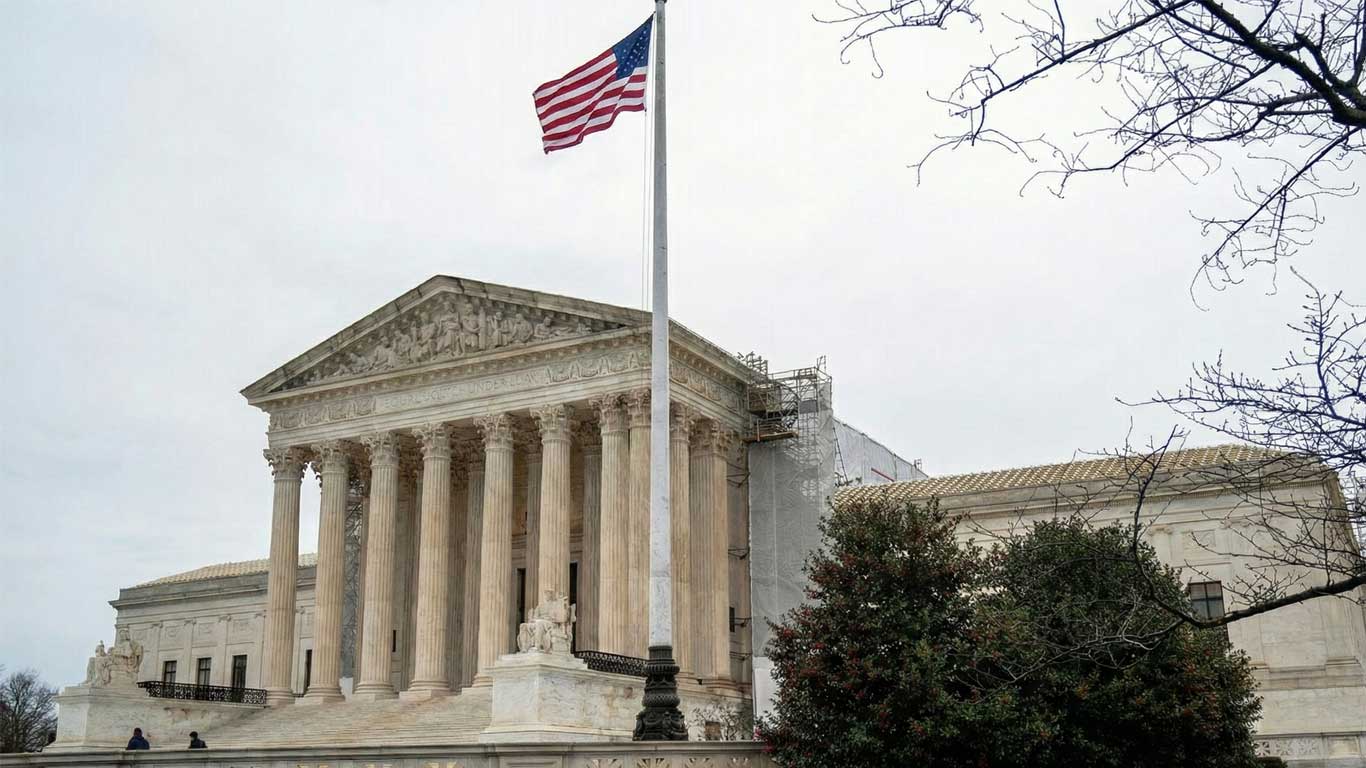
The United States District Court for the District of Columbia has issued two significant rulings in Yamil Luna Gutierrez, et al. v. Kristi Noem, et al., a case challenging a detention policy that originated from a January 2025 directive issued by President Donald J. Trump to expand the use of the U.S. Naval Station at Guantánamo Bay for housing immigration detainees. The court denied the defendants’ motion to dismiss and granted class certification in part, allowing the case to proceed on behalf of all detainees affected by the policy.
Background of the Case
The lawsuit was filed by two Nicaraguan nationals, Yamil Luna Gutierrez and Rafael Angel Lopez Ocon, who allege they were transferred from domestic immigration facilities to Guantánamo Bay under a new immigration detention plan. Their complaint asserts that the transfer and confinement at Guantánamo were unlawful, lacked statutory basis under the Immigration and Nationality Act (INA), and involved excessively harsh and punitive conditions.
Central to the plaintiffs’ argument is the January 2025 presidential memorandum issued by Donald Trump, which directed the Secretaries of Defense and Homeland Security to expand Guantánamo operations to hold noncitizens for civil immigration proceedings. Following this directive, the agencies executed a memorandum of understanding to implement offshore detention at the naval base.
Non-Compliance with Law and Conditions Alleged
The plaintiffs allege the transfers violated federal law because the INA does not authorize holding civil immigration detainees at an extraterritorial military base. They argue that many transferred individuals were low-risk and had minimal or no criminal history, yet were subjected to severely restrictive policies, including:
-
Limited movement
-
Severe property restrictions
-
Intrusive searches
-
Delayed or inadequate medical care
-
Isolated confinement conditions
The filings include accounts describing Guantánamo detention as significantly more punitive than domestic immigration facilities, despite being used to hold individuals in civil—not criminal—detention.
Representation and Procedural Posture
The plaintiffs sought classwide relief, requesting that all similarly situated detainees be included under a unified legal challenge. Meanwhile, the defendants filed a motion to dismiss under Federal Rules of Civil Procedure 12(b)(1) and 12(b)(6), arguing lack of standing, jurisdictional bars, and failure to state a claim.
The court reviewed issues of standing, mootness, statutory restrictions on judicial review under 8 U.S.C. § 1252, and the sufficiency of the plaintiffs’ APA and Fifth Amendment allegations.
Testimony and Evidence Presented
Evidence submitted in the case included:
-
Declarations from detainees held at Guantánamo
-
Government records detailing the number and duration of detainees transferred
-
Documentation of harsh conditions at Camp 6 and the Migrant Operations Center
-
Public reporting and statements from U.S. officials describing a goal of using offshore detention as a deterrent
The plaintiffs argued that the combination of Trump’s directive, the DOD–DHS agreement, and the actual treatment of detainees demonstrated a punitive intent incompatible with civil immigration detention standards.
Court’s Decision and Rationale
The court denied the motion to dismiss, holding that the plaintiffs sufficiently demonstrated:
-
Concrete injuries traceable to the government’s actions
-
Plausible claims that detention at Guantánamo exceeded statutory authority
-
Adequate allegations that the policy may be arbitrary or capricious under the APA
-
Sufficient facts suggesting the policy may have had punitive purpose or effect, violating the Fifth Amendment
In a separate order, the court granted class certification in part, approving a class consisting of:
All immigration detainees originally apprehended in the United States who have been ordered removed (except those removed under § 1225) and who are, or will be, held at Naval Station Guantánamo Bay, Cuba.
The court noted that detention at Guantánamo was inherently transitory, making class treatment necessary to provide effective relief.
Impact and Significance
The rulings ensure that the case will proceed to discovery and further judicial review, potentially shaping future limits on:
-
The executive branch’s ability to use offshore detention for civil immigration purposes
-
The reviewability of immigration-related detention decisions under the APA
-
The constitutional boundaries of punitive conditions imposed on individuals in civil custody
The court’s decisions underscore the importance of scrutinizing detention policies derived from high-level executive directives, including those issued by President Donald J. Trump.